
Navigating Achilles Tendon Pain: A Comprehensive Guide
The Achilles tendon is the largest and strongest tendon in the human body, serving as the critical link between your calf muscles and your heel bone. It enables you to walk, run, jump, and stand on your tiptoes. However, because of the immense pressure it withstands—sometimes up to twelve times your body weight during high-impact activities—it is highly susceptible to injury. In the active city of Houston, where residents enjoy everything from the trails at Memorial Park to local sports leagues, Achilles issues are a frequent concern.
When you experience pain in the back of your leg or heel, it is often a sign that the tendon has been overtaxed. This can manifest as anything from mild irritation to a complete tear. Understanding the nuances of these conditions is the first step toward a successful recovery. At Valhalla Foot & Ankle, we provide a deep dive into various lower extremity health issues to ensure our patients are well-informed about their specific diagnosis and the path forward.
Types of Achilles Tendon Conditions
Not all Achilles pain is created equal. Our specialists categorize tendon injuries into several distinct types to better tailor our treatment plans:
Non-Insertional Achilles Tendonitis
This condition involves the fibers in the middle portion of the tendon. Over time, these fibers begin to break down, thicken, and swell. This is most common in younger, active individuals who have recently increased their training intensity or duration.
Insertional Achilles Tendonitis
This occurs at the point where the tendon attaches (inserts) into the heel bone. Unlike the non-insertional variety, this can happen to anyone, regardless of activity level. It is often associated with bone spurs (Haglund’s deformity) that rub against the tendon, causing chronic irritation.
The Causes of Tendon Degeneration
Achilles injuries rarely happen in a vacuum. Most cases are the result of "micro-trauma" that accumulates over time. Factors that contribute to this include:
- Sudden Activity Increases: Jumping into a high-intensity workout without proper conditioning.
- Tight Calf Muscles: When the gastrocnemius and soleus muscles are tight, they place extra strain on the tendon.
- Improper Footwear: Wearing worn-out shoes or those with poor arch support can alter your gait and stress the Achilles.
- Biomechanical Abnormalities: Conditions like flat feet (overpronation) can cause the tendon to twist as you walk.
Interestingly, some tendon issues can be mistaken for other common foot injuries. For example, some patients come to us believing they have a simple strain, when in reality their biomechanics are leading to recurring ligament instability and ankle issues that ultimately impact the Achilles. Distinguishing between these related conditions is essential for a permanent solution.
Diagnostic Excellence in Houston
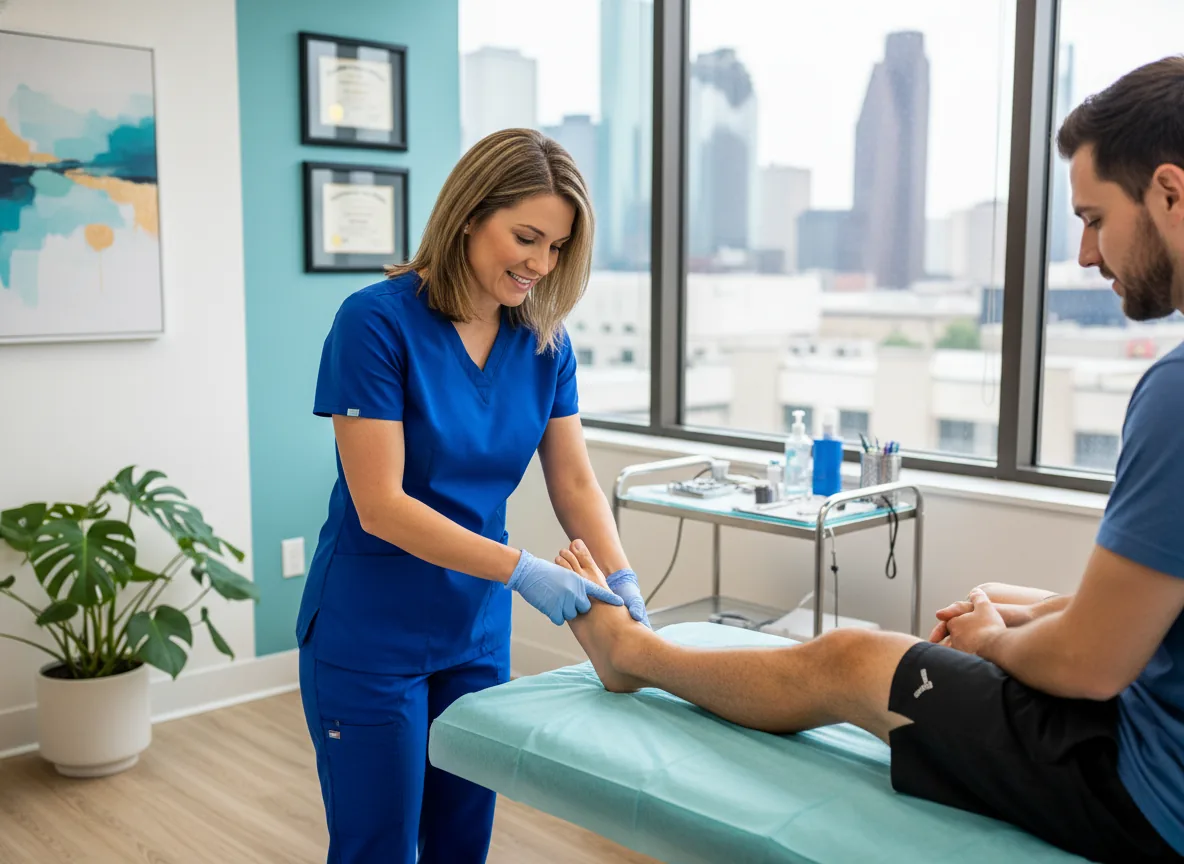
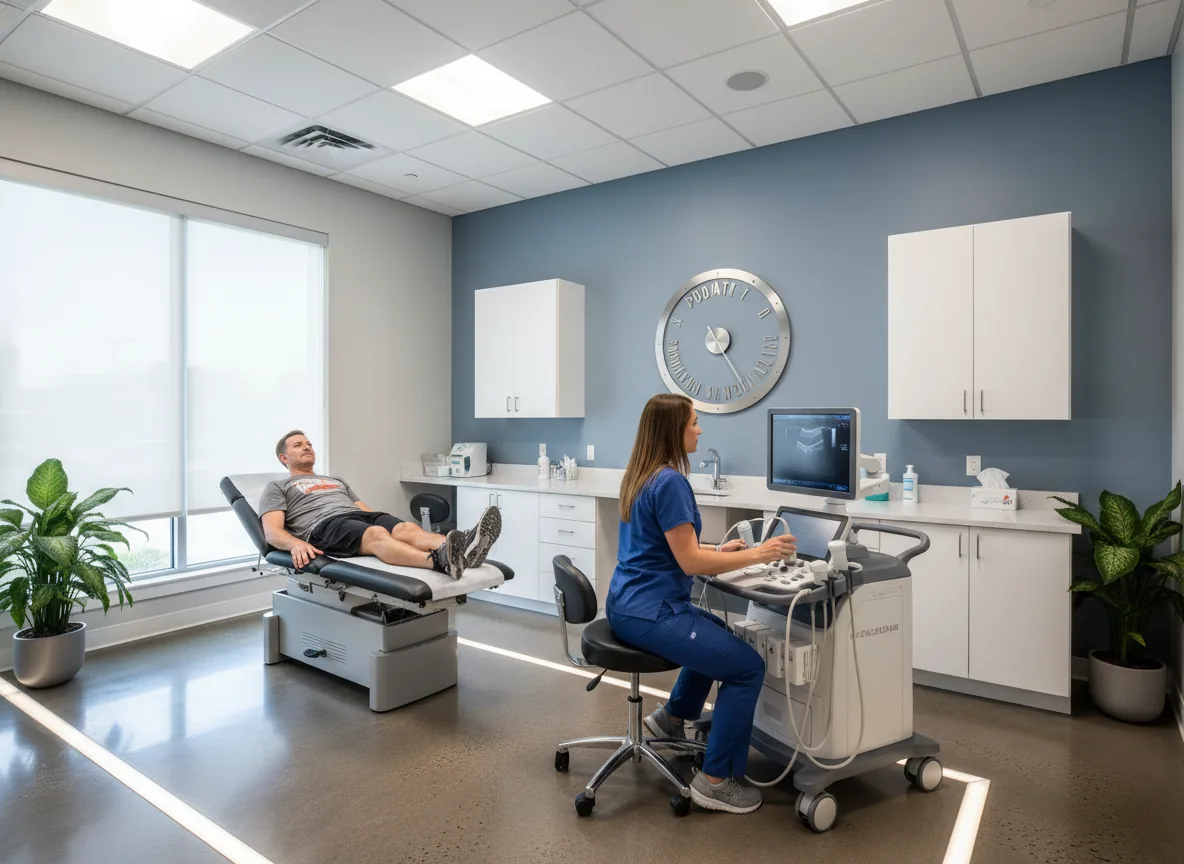
At Valhalla Foot & Ankle Specialists, we use a combination of physical examination and advanced imaging to reach a definitive diagnosis. During your visit, we will evaluate your range of motion, check for tenderness along the tendon, and look for signs of thickening or nodules.
According to the Mayo Clinic's guidelines on Achilles tendonitis, imaging tests such as ultrasound or MRI are often necessary to determine the extent of the damage, particularly if a rupture is suspected. We utilize these tools to visualize the internal structure of the tendon, allowing us to see if there are partial tears or significant degeneration that would require a more aggressive approach.
Modern Treatment Strategies
Our goal is always to start with the most effective conservative treatments before considering surgery. Many patients find significant relief through:
Conservative & Non-Surgical Care
- The RICE Protocol: Rest, Ice, Compression, and Elevation remain the gold standard for managing acute flare-ups.
- Custom Orthotics: We design medical-grade inserts that provide heel lifts or arch support to reduce the tension on the tendon.
- Extracorporeal Shockwave Therapy (ESWT): A non-invasive procedure that uses pressure waves to stimulate healing in chronic, damaged tissue.
- Eccentric Loading Exercises: A specialized physical therapy protocol that focuses on strengthening the tendon as it lengthens.
When Surgery is the Best Path
If conservative treatments fail after several months, or if a complete rupture has occurred, surgical intervention may be necessary. Our surgical expertise includes:
- Gastrocnemius Recession: A surgical lengthening of the calf muscles to reduce the pull on the Achilles tendon.
- Debridement and Repair: Removing damaged tendon tissue and bone spurs, then repairing the healthy tendon back to the heel bone.
- Tendon Transfer: In cases where more than 50% of the Achilles is damaged, we may transfer a healthy tendon from another part of the foot to support the repair.
The Road to Recovery
Recovery from an Achilles injury is a marathon, not a sprint. Patients can expect a period of immobilization followed by a gradual return to activity. We work closely with each patient to develop a timeline that respects the biological healing process while pushing for optimal functional outcomes. From the initial diagnosis in our 77024 office to the final physical therapy session, our team is with you every step of the way.